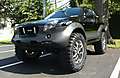
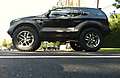
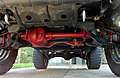
classic? yes may I have another?
Quoted from Merriam-Webster:Originally Posted by Y33TREKker

clas·sic adj \?kla-sik\
Definition of CLASSIC
-serving as a standard of excellence : of recognized value <classic literary works>
-traditional, enduring <classic designs>
-historically memorable <a classic battle>
-authentic, authoritative
Wow, thanks for the compliment :-)
I did not imply that anyone "did not get it", I stated very plainly that some of us don't mind paying the bills around here, and encouraging others to join us in the pleasure of supporting and enabling this site to exist. And there is absolutely nothing wrong with that. A service is being provided and some pay for it. I would hate to see how you interact with a toll booth operator, or a girl scout selling cookies, or someone raising money for any cause really.
But my "classic" opinion is the one that keeps this site running, and if everyone in your words "did not get it" like you, then this site would not exist. But thanks for saying that being a Site Supporter is "classic", I tend to agree and I think that it is this "classic" mindset that has kept many organizations going and I think this mindset has a few classic slogans:
-there's no such thing as a free lunch
-someone has to keep the lights on in this place
-no free rides in life
-there is a price for everything
-you don't get something for nothing
This really is just an economical issue: (quote from Wikipedia)
"No free lunch demonstrates opportunity cost. Greg Mankiw described the concept as: "To get one thing that we like, we usually have to give up another thing that we like. Making decisions requires trading off one goal against another." The idea that there is no free lunch at the societal level applies only when all resources are being used completely and appropriately, i.e., when economic efficiency prevails. If not, a 'free lunch' can be had through a more efficient utilization of resources. If one individual or group gets something at no cost, somebody else ends up paying for it. If there appears to be no direct cost to any single individual, there is a social cost. Similarly, someone can benefit for "free" from an externality or from a public good, but someone has to pay the cost of producing these benefits."
Or this could be seen as a scientific issue: (quote from wikipedia)
"In the sciences, no free lunch means that the universe as a whole is ultimately a closed system—there is no magic source of matter, energy, light, or indeed lunch, that does not draw resources from something else, and will not eventually be exhausted. Therefore the no free lunch argument may also be applied to natural physical processes in a closed system (either the universe as a whole, or any system that does not receive energy or matter from outside). (See Second law of thermodynamics.) The bio-ecologist Barry Commoner used this concept as the last of his famous "Four Laws of Ecology"."
But regardless, whatever way you look at it, yes classic indeed